


15 July 2026
When health information is sought online: social media, AI, questions and mistrust
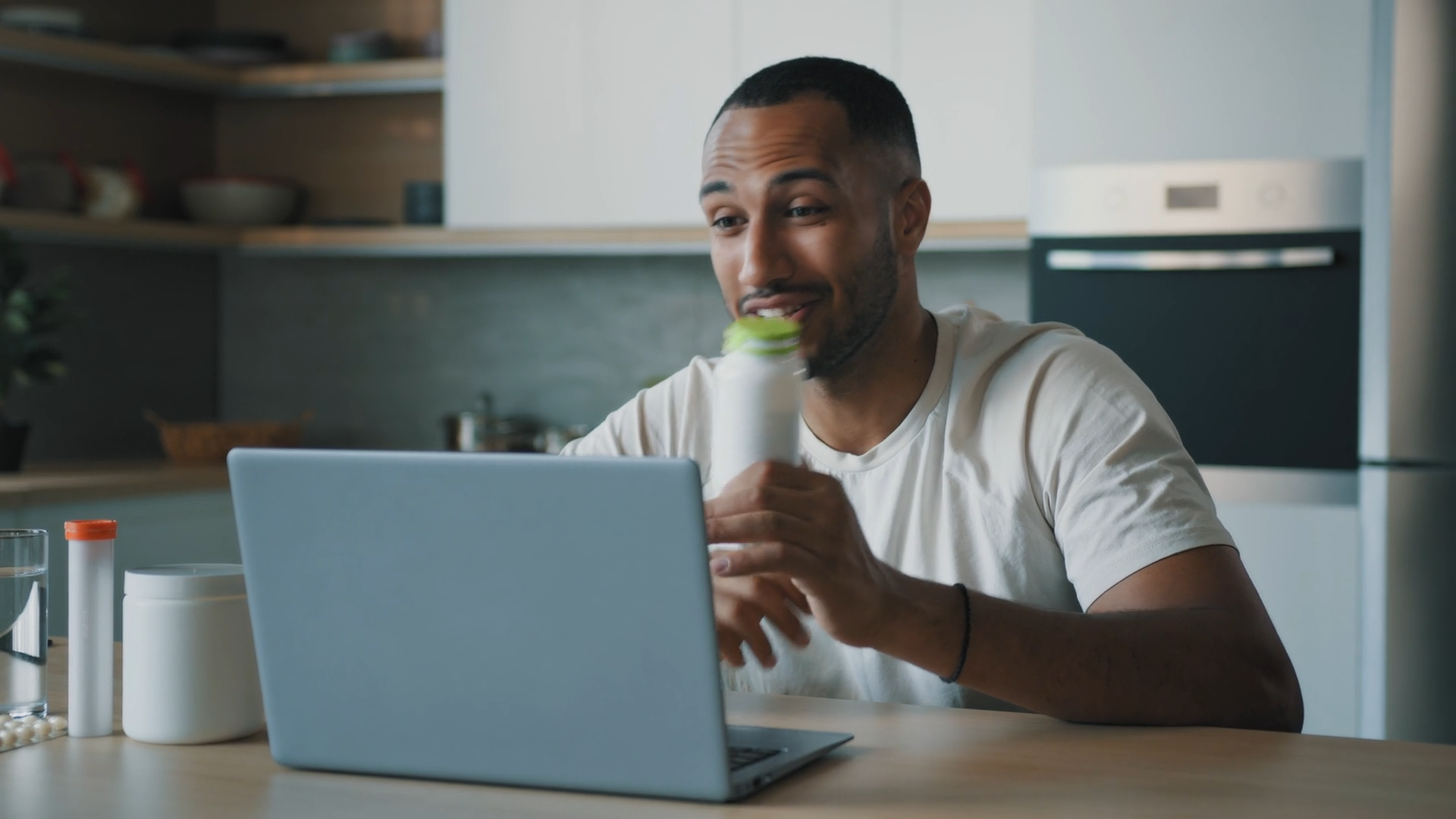
A sudden discomfort, a symptom that recurs frequently or a minor accident that does not initially appear to require urgent medical attention can lead many people to look for answers on their phones. Within minutes, the same health concern can lead to videos, personal accounts, professional advice, advertising and individual experiences that all coexist on the same screen. Social media has expanded access to health information, but it has also created an environment in which usefulness, confusion and mistrust often appear at the same time.
This way of seeking information already plays a significant role. A Pew Research Center survey published in April 2026, involving 5,111 adults in the United States, found that 36% occasionally turn to social media for health information. The figure remains lower than the percentage of people who consult healthcare professionals, but it shows that digital platforms form part of the information-gathering process for a considerable proportion of the population. In addition, 73% use three or more types of sources, meaning that medical consultations, specialist websites and the experiences of other users are often combined.
Some of the main reasons are speed and ease of access. Social media is available at any time, allows users to search for specific terms and offers brief explanations of topics that may be difficult to understand quickly. Among those who receive health information through these platforms, 40% consider access to this content highly convenient. Speed makes it possible to find information almost as soon as a question arises, but that information is usually general and does not take each person’s specific circumstances into account. The fact that an answer is immediately available does not mean that it is accurate or directly applicable to the person reading it.
The search for health-related answers is no longer limited to search engines or social media. Artificial intelligence chatbots are also becoming an initial source of guidance when a question arises and someone is unsure how to respond. A Pew Research Center survey published in 2026 found that 22% of adults in the United States had used AI chatbots to resolve health-related questions. The ability to describe a situation, add further details and ask follow-up questions creates a different experience from watching a video or reading a post.
In the case of a burn, a wound, a bruise that changes in appearance or a possible risk of infection, AI may become the first place someone turns to in order to understand the situation and decide what to do next. Much of its value lies in its immediacy: it can respond before a healthcare professional has been contacted or while the person is still deciding whether this is necessary. However, the tool cannot physically examine the user, access their complete medical information or guarantee that it has interpreted the description correctly. A clear and convincing answer may contain errors, overlook important details or convey more certainty than the available information allows, which is why the WHO recommends caution when using generative AI for health-related matters.
This difference between convenience and reliability explains part of our relationship with digital health information. Almost half of those who receive health information through social media consider it to be not very accurate or not accurate at all, while only 7% rate it as highly accurate. However, recognising this lack of trust does not prevent people from continuing to consume it. Someone may distrust the platform as a whole while still paying attention to certain profiles or personal accounts. Trust is often placed in the person appearing on screen, in the way they communicate or in an experience with which the user identifies.
The role of health and wellness content creators also has an influence. Another Pew analysis published in May 2026 examined 12,800 accounts belonging to 6,828 creators with at least 100,000 followers. Only 41% described themselves as healthcare professionals, while 16% provided no information about their training or experience. The professional appearance of a video, the number of followers or the confidence with which a recommendation is delivered can be mistaken for specialist knowledge. However, these elements alone do not confirm whether the person speaking has the necessary qualifications.
Personal accounts add another layer. Listening to someone who has experienced similar symptoms or received the same diagnosis can help a person feel understood. The Pew report shows that 66% of adults obtain health information from people facing problems similar to their own. A shared experience can provide support and generate useful questions for a future consultation, but it remains an individual experience. What worked or caused a side effect in one person does not necessarily predict what will happen in a different body.
The problem becomes even greater when one piece of information contradicts another. A food may be presented as essential in one video and harmful in the next; a symptom may be linked to a serious illness and, seconds later, described as a normal reaction. Seventy-six per cent of participants reported encountering contradictory health information, while 54% acknowledged having difficulty deciding what to believe. An abundance of answers does not always reduce uncertainty and may instead create new questions that did not previously exist.
The characteristics of the platforms themselves contribute to this situation. Social media organises content according to its ability to capture attention and keep users within the application. In health communication, this can favour forceful messages, dramatic results or explanations that reduce complex problems to a single cause. Scientific evidence tends to develop through nuance, probability and findings that may change with further research, whereas social media often rewards brief and confident claims. Content that acknowledges limitations may appear less attractive than content promising to identify the true cause of a symptom.
Mistrust does not arise solely from false content. Some people turn to social media because they have not received an explanation they understand, they face difficulties accessing healthcare or they feel that their concerns have not been heard. A study published in 2026 found that patient-centred clinical communication strengthened trust in healthcare professionals and reduced reliance on social media as a source of health information. Listening, explaining clearly and responding to questions can act as a barrier against digital confusion.
Users also express clear expectations of a health information source. Three quarters of participants in the Pew report considered it very important that the person providing information had relevant medical training; 73% valued transparency regarding potential conflicts of interest, such as paid partnerships or financial benefits linked to a recommendation, while 72% considered it important that explanations were easy to understand. Credibility depends on both knowledge and the ability to communicate it clearly and honestly. Providing information about qualifications, citing sources and distinguishing personal experience from general advice can help create safer digital spaces.
Looking for health information on social media is not inherently a negative habit and does not necessarily lead to harmful decisions. It can provide access to prevention campaigns, disseminate scientific knowledge or help people formulate more precise questions. The risk arises when general content replaces an individual assessment, a personal experience is interpreted as evidence or popularity takes the place of scientific support. Checking who is speaking, what qualifications they hold and which sources they use has become an important health literacy skill.
Social media already forms part of the way many people understand their bodies, interpret symptoms and make health-related decisions, so ignoring this space does not remove its risks or reduce its influence. The challenge is to respond to the need for information without reinforcing fear, false reassurance or mistrust, while ensuring that professional health communication is also accessible, clear and approachable. When questions receive understandable answers both inside and outside the consultation room, it becomes easier to use social media as a starting point rather than as the place where a health decision ends.

