


5 October 2026
Opening your eyes is just the beginning: what really happens after a coma
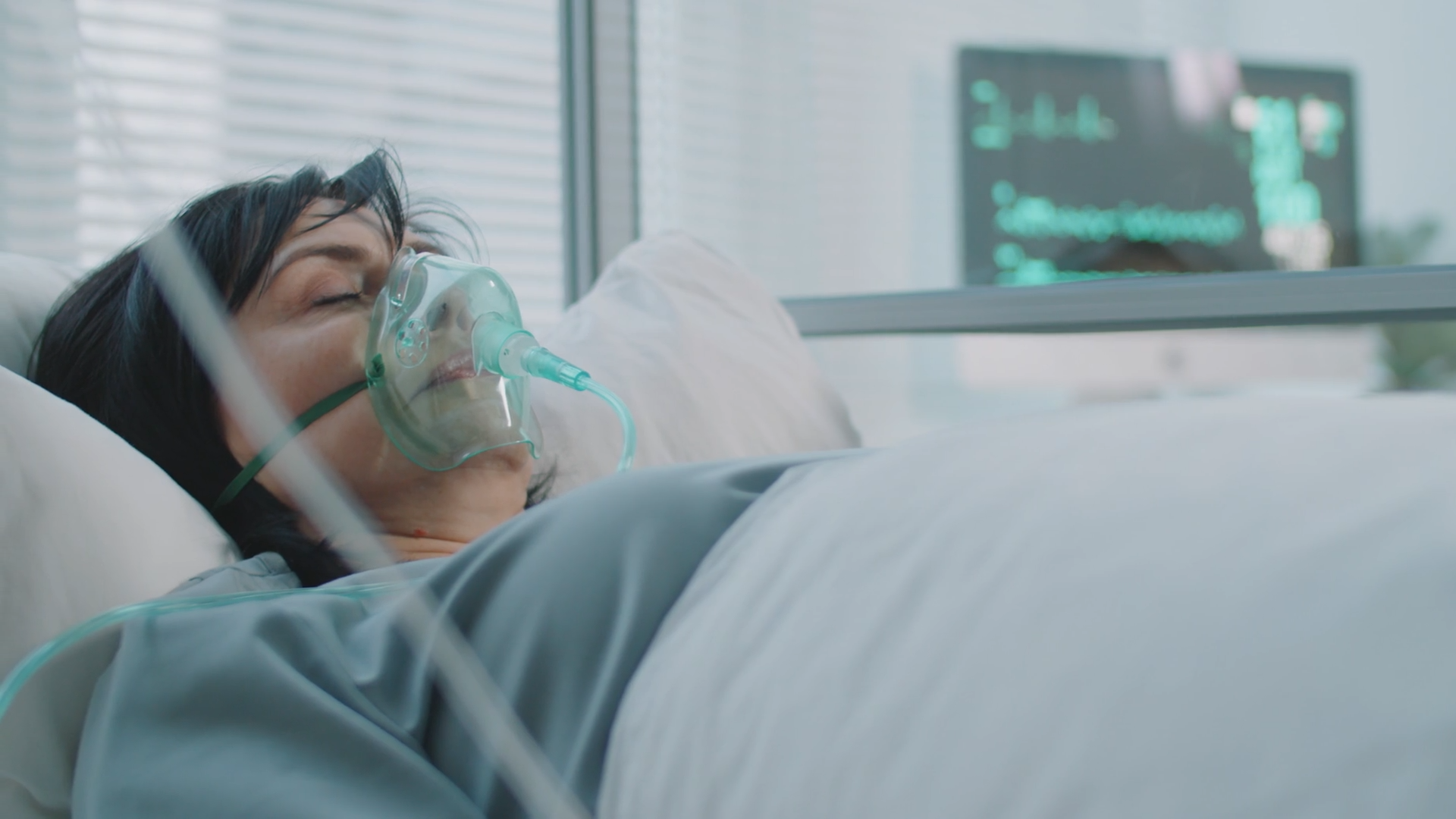
Cinema and television have sold us for years the idea that regaining normality after waking from a coma can be a matter of seconds: the person opens their eyes, recognizes those around them, and shortly after, starts speaking. In reality, however, it is much less idyllic, and regaining consciousness after a severe brain injury is usually just the beginning of a much longer process.
After weeks or months without responding to the environment, the body has changed, the brain needs to recover functions, and activities as automatic as sitting, swallowing, or holding a conversation may require rehabilitation.
Moreover, not everything we popularly call "coma" is really one.
Coma usually does not last months
When someone has been unresponsive for a long time, it is common to say they have been "in a coma for months." Medically, however, coma is usually a shorter phase. Over days or weeks, the person may begin to regain consciousness or evolve into other states where they already open their eyes or show sleep-wake cycles, although they still do not respond clearly to what is happening around them.
This is where the situation becomes much less simple than it seems from the outside. Some patients show no obvious response; others begin to follow a gaze, react to a voice, or occasionally obey an order. And these signs are not always easy to detect.
In fact, the American Academy of Neurology cites studies in which around 40% of patients considered unconscious actually showed signs of consciousness that had gone unnoticed.
That is why, when we talk about someone who "wakes up after months," we are often not describing a sudden leap from a deep coma to full consciousness, but a gradual process in which increasingly clear responses begin to appear.
Opening the eyes is only a first step
Once consciousness is regained, it is when everything the body has lost during the weeks or months immobilized also becomes visible.
One of the most important changes is the loss of muscle and strength. Prolonged immobility, inflammation typical of a critical patient, mechanical ventilation, and some treatments accelerate deterioration that can progress much faster than we imagine.
A review published in 2025 reports losses of approximately 13-17% of muscle mass in the upper limbs and 19-21% in the lower limbs during a single week in critical patients. In the most acute phases, the decline can approach 2% daily.
The result is that a person who previously walked normally may need help simply to sit up, stay seated, or stand. Regaining consciousness does not mean the body is ready to immediately do the same as before.
Walking again is not the only challenge
Difficulty standing up and walking, or loss of strength in arms and legs, are usually the most visible parts of recovery after a coma. But weakness also affects muscles that go much more unnoticed.
After a prolonged hospitalization, difficulties may appear in breathing without assistance, coughing strongly enough, or swallowing safely. The latter is especially important, as a swallowing disorder increases the risk of food or liquids entering the airways.
That is why recovery goes far beyond walking again. Depending on each case, rehabilitation professionals, physiotherapists, occupational therapists, speech therapists, neurologists, or nutritionists may be involved.
The goal is to gradually recover increasingly everyday functions: maintaining an upright trunk, standing up, taking some steps, eating without help, dressing, or regaining some autonomy.
The brain also has to recover
In addition to obvious physical sequelae, problems with attention, memory, language, orientation, or behavior control are other complications that may arise after a coma. Some people wake up disoriented and do not know where they are or how much time has passed. Others recognize their family but have difficulty remembering recent events, organizing a task, or maintaining a conversation.
Recovery depends greatly on the cause and extent of brain damage. A traumatic brain injury after an accident is not the same as prolonged oxygen deprivation after cardiac arrest, a brain hemorrhage, or a stroke. Age, complications during hospitalization, and early signs of recovery also influence.
That is why there is no universal timeframe after which it can be stated that someone will no longer recover functions. The American Academy of Neurology guidelines indicate that some people continue to show progress even quite some time after beginning recovery. In general, traumatic injuries have better recovery prospects than many non-traumatic brain damages, although the evolution can be very different from one person to another.
Does one become exactly the same person again?
Recovery can be very different from one person to another. Some regain total independence, while others maintain physical or cognitive limitations and need help with daily activities.
Moreover, hospital discharge does not necessarily mark the end of the process. After a prolonged stay in intensive care, weakness, fatigue, cognitive problems, and emotional disturbances may persist for months. This set of sequelae is known as post-ICU syndrome.
A recent review notes that more than a third of survivors of critical illnesses present physical, cognitive, or psychological problems after discharge, and in some cases, physical limitations persist even years later.
Waking up is not a moment, but a process
Perhaps this is the biggest difference between the image fiction usually offers and what really happens in our body. It is not an instantaneous process, and of course, it is not uniform.
Two people who have gone through an apparently similar coma can evolve very differently. The cause of the damage, age, complications during hospitalization, and early signs of recovery influence a process that does not always progress at the same pace or reach the same point.
Opening the eyes can be a huge moment for a family, but from a medical point of view, it usually marks the beginning of another stage: checking which functions have been preserved, which are beginning to recover, and how far that evolution can go.
```

