


2 November 2026
Researchers Improve the Memory of Aging Flies: A Protein Offers New Insights into Age-Related Memory Loss
Forgetting where we left our keys, taking longer to recall a name, or needing someone to repeat information are common situations as we age. Although memory loss associated with aging has been researched for decades, many questions remain about the changes that occur inside neurons.
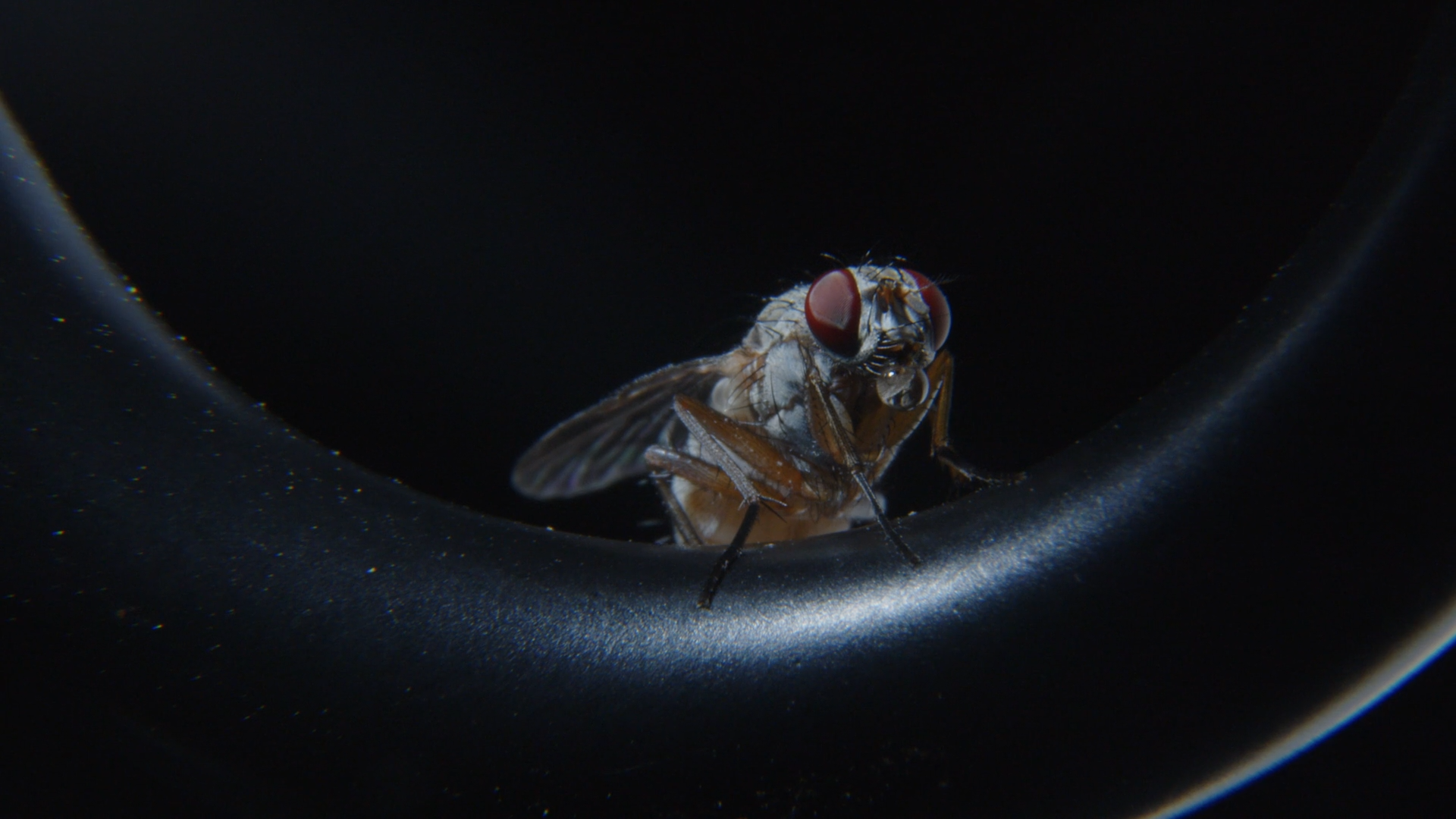
Now, an international team of scientists has managed to improve the memory of aged fruit flies by acting on a protein involved in the preservation of memories. The discovery, published on October 30 in the scientific journal Cell, identifies a molecular mechanism that helps explain why memory becomes less effective with age and proposes a new line of research to address this decline.
The most striking aspect is that the observed process seems to be related to protein structures usually associated with neurodegenerative diseases, but that also perform essential functions in a healthy brain.
Six years investigating the brains of ten million flies
The research, led by Spanish biochemist Rubén Hervás from the University of Hong Kong, with participation from the Spanish National Research Council (CSIC), required six years of work and the study of approximately ten million fruit flies.
The scientists analyzed their brains at eight different stages of adult life, from the first day up to 35 days old, when these insects already show characteristics typical of aging.
The choice of flies is due to their usefulness as an experimental model in neuroscience. Although their nervous system is much simpler than that of humans, they share numerous cellular and molecular mechanisms that allow the study of complex processes, including the formation and preservation of memories.
The goal was to observe how a protein directly related to long-term memory transforms throughout life, rather than limiting the study to comparing young and aged brains at isolated moments.
To do this, the researchers used cryogenic electron microscopy, a technique that allows the study of molecular structures with extraordinarily high resolution. Thanks to this, they identified seven different configurations of a protein called Orb2 and reconstructed how they evolved over time.
What happens to memories as we age
For a memory to remain in our mind, neurons need to keep certain connections between them active. Different proteins are involved in this process, including one called Orb2, which helps preserve information long-term. The researchers discovered that as the flies aged, this protein changed shape and lost part of its ability to perform this function.
Interestingly, Orb2 belongs to a family of proteins also related to diseases such as Alzheimer’s. However, in this case, it plays a beneficial role in the brain by helping maintain memories. The problem arises when its structure changes over time: although the protein remains present, it no longer functions as effectively as when the organism is young.
Based on this discovery, the scientists wanted to check if it was possible to restore Orb2’s function and, with it, improve the memory of aged flies.
Funes, the protein that allowed memory improvement
To verify this, the researchers turned to another protein called Funes, named after Funes the Memorious, a story by Argentine writer Jorge Luis Borges about a young man capable of remembering even the most insignificant details of his experiences.
Funes is involved in maintaining other proteins, helping them preserve a proper structure to function correctly. The scientists found that increasing its presence in certain neurons of aged flies caused Orb2 to regain characteristics typical of younger stages, and the animals improved their ability to remember. In other words, an intervention on the functioning of these molecules had succeeded in improving a capacity that had deteriorated over time.
The team also performed the opposite experiment. By promoting in young flies the changes that Orb2 normally undergoes during aging, they observed that their memory worsened earlier than usual, so the results suggest that some molecular changes associated with brain aging can be modified, at least in these animals, and that doing so has direct consequences on their ability to remember.
From a fly’s brain to a human’s: the next challenge
Although the experiments were conducted with fruit flies, the discovery is relevant to human aging research. Our brain has a protein related to Orb2, called CPEB3, which also participates in the processes necessary to preserve long-term memories. This similarity has led scientists to wonder if the transformations observed in insects also occur in humans.
The next goal will be to investigate how CPEB3 behaves throughout life and whether mechanisms exist that can maintain its activity during aging. Rubén Hervás’s team has funding from the Hong Kong government to deepen this line of work, which will allow studying to what extent the results obtained in flies have equivalents in the human brain.
For now, improving the memory of an aged fly is far from having a treatment for people. Researchers still need to determine if these proteins undergo similar changes in our bodies, how important they are in age-related forgetfulness, and whether it would be safe to intervene on them. It will also be necessary to distinguish the processes inherent to normal aging from those involved in neurodegenerative diseases such as Alzheimer’s.
The answer to these questions will determine whether the mechanism identified in flies has future applications in medicine and whether acting on the proteins involved in memory preservation could become a strategy to combat age-related memory decline.

