


2 October 2026
7 to 18 hours a week: Here's how our use of headphones and our hearing have changed, according to an Apple study
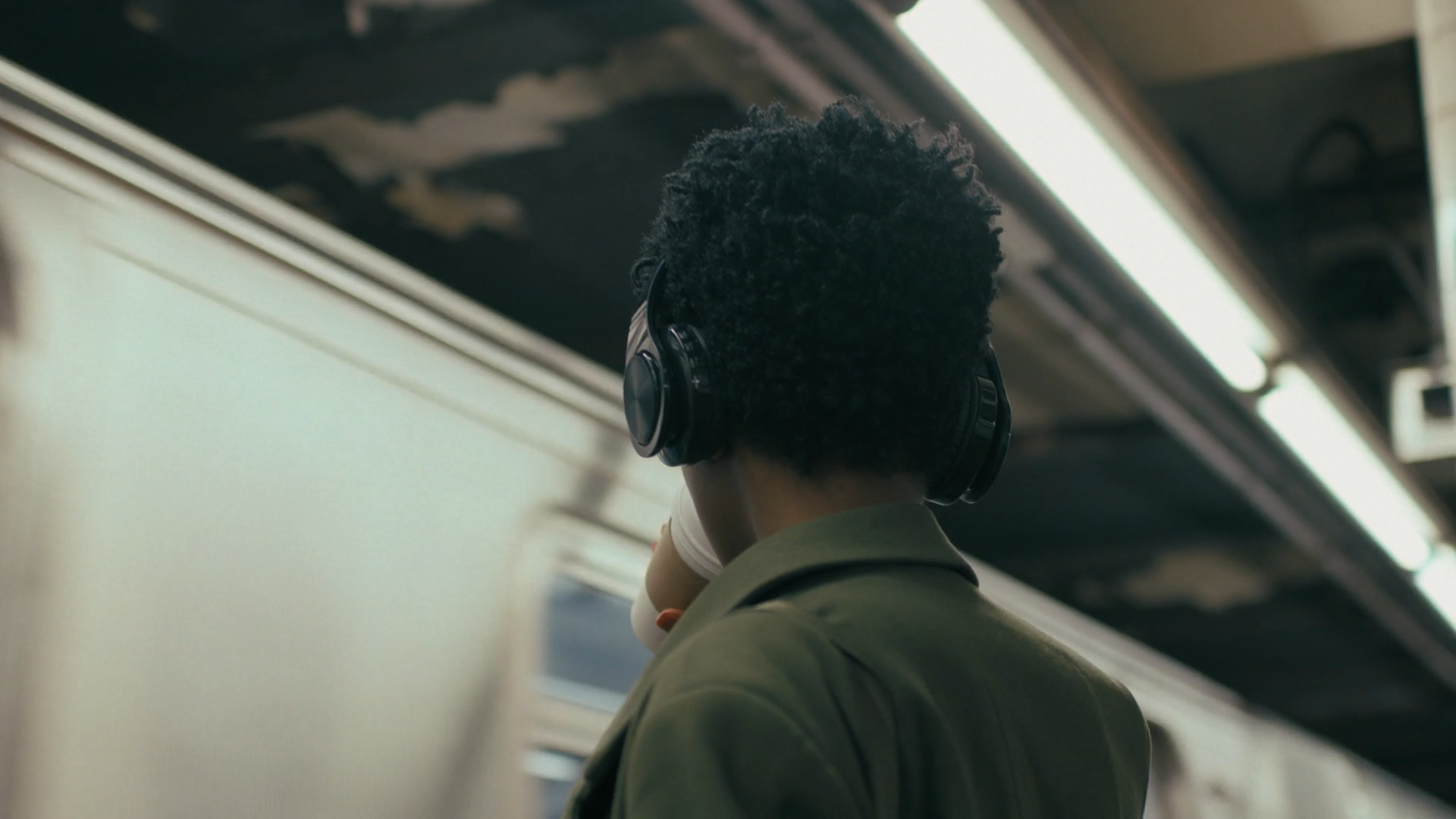
It is not unusual nowadays to leave the house with music, listen to a podcast on the way to work or class, put on headphones to concentrate, train with them, and end the day watching videos or talking on the phone. For many people, receiving sound directly in their ears for several hours is already part of the routine. However, that exposure time can be as important as the volume.
A longitudinal study published this year found that, among participants followed from adolescence to young adulthood, the average time of personal listening device use increased from about 7 to about 18 hours per week. Episodes of tinnitus, or in other words, the perception of ringing or buzzing in the ears without an external source, also became more frequent over time.
This is a small follow-up study that, nevertheless, reflects an easily recognizable trend: headphones occupy more and more hours of the day. And for hearing, those hours count.
The problem is not the headphones, but the sound dose
Talking about the risk of headphones only in terms of using them or not at “high volume” means oversimplifying a problem that is much more complex.
The World Health Organization points out three fundamental elements: sound intensity, how long the exposure lasts, and how often it is repeated. The higher the sound level, the less time we can be exposed to it before exceeding levels considered safe listening.
At about 80 decibels, the WHO uses up to 40 hours per week as a reference. At 90 decibels, that margin drops to around four hours. And it continues to decrease rapidly as intensity increases: at 95 decibels, the reference is approximately one hour and fifteen minutes per week.
This explains why thinking only about whether “the music is too loud” is insufficient. Moderately high listening for many hours also increases accumulated exposure.
The WHO and the International Telecommunication Union use the concept of sound dose to explain that exposure does not depend solely on volume. It also matters how long we listen and how often we do so. Therefore, several hours of music, videos, calls, or ambient noise end up forming part of the same accumulated exposure.
Seven years measuring how we listen
The dimension that headphone use has acquired in recent years is also observed in the Apple Hearing Study, a research project started in 2019 by the University of Michigan and Apple, with collaboration from the WHO.
Its final report, published on September 30, 2026, summarizes seven years of follow-up and data from more than 268,000 American adults. Participants provided information about ambient sound levels, audio played through headphones, hearing tests, and listening-related habits. The researchers describe it as the largest study conducted so far on personal exposure to environmental noise and headphone sound.
The research does not exclusively represent young people nor directly attribute certain hearing problems to headphone use. Its value lies mainly in the scale: for the first time, there is a huge amount of data on how much sound actually accompanies people during their daily lives.
And that exposure no longer comes only from environments we clearly identify as noisy.
A concert, a nightclub, or street construction catch our attention because the sound is obvious. Headphones work differently: we can wear them for hours without feeling that we are in an excessively noisy environment.
The ear does not always warn with an obvious loss
One of the problems with noise-induced hearing loss is that it usually develops gradually.
It does not necessarily start with the sensation of “hearing less.” The first difficulties may affect high-pitched sounds or appear in specific situations, such as trying to follow a conversation in a crowded restaurant. Tinnitus, that ringing or buzzing some people experience after a concert or intense exposure, also constitutes a warning sign when it persists or repeats.
The results of this study are especially interesting precisely for this reason. Although no generalized worsening of conventional hearing was found between the two analyzed moments, more tinnitus was observed after recreational exposures and some subtle auditory changes. The researchers, however, suggest that alterations may be occurring that do not always appear in standard tests and emphasize the need to continue studying it with larger samples. Therefore, not noticing an obvious hearing loss does not necessarily mean that sound exposure is not having effects.
Are small headphones worse?
The risk does not necessarily depend on whether we use earbuds, over-ear headphones, or any other format, but mainly on the sound level reaching the ear and the time we maintain it.
In fact, good isolation or active noise cancellation can be beneficial in certain environments. In the subway, on a plane, or on a busy street, we tend to increase the volume to hear over external noise. Reducing that noise allows keeping music or podcasts at lower levels, which is why the WHO itself recommends well-fitting headphones with noise cancellation when listening in noisy places.
It is not, therefore, that a specific type of device automatically protects the ear, but rather avoiding having to constantly compete with the sound of the environment.
Why the phone is starting to warn us
More and more devices show audio levels, send alerts when a certain exposure is exceeded, or allow automatic volume limiting.
These functions respond precisely to the shift in focus from momentary volume to accumulated exposure.
The safe listening standard developed by the WHO and the International Telecommunication Union proposes that devices calculate the percentage of sound “dose” consumed by each user and can warn when the combination of intensity and time begins to exceed recommended references. It also contemplates systems capable of automatically reducing volume after prolonged exposures.
The well-known recommendation to keep the device around 60% of its maximum volume works as a simple rule but does not replace that accumulated measure. A specific percentage does not generate exactly the same decibels on all phones, headphones, or recordings.
That is why it is more useful to understand the relationship between volume and time than to memorize a single figure.
Listening more also requires thinking differently
Headphones are not a recent phenomenon, but their constant presence is. While before their use was limited to listening to music, today they are also used for podcasts, videos, calls, meetings, video games, classes, and social media content. The same device accompanies activities that were previously spread across different moments and devices.
That change makes the important question no longer only whether we ever turn the music too loud, but how many hours of sound, of any kind, we accumulate without being aware of it.
Most of those hours will not by themselves cause hearing damage. Nor does wearing headphones inevitably mean losing hearing. The risk appears when intensity, duration, and repetition combine sufficiently over time.
And perhaps the most relevant aspect of recent data is this: while listening through headphones is becoming an increasingly widespread activity, our perception of risk remains mainly associated with exceptionally noisy moments.
Our devices have already started counting decibels and hours. Perhaps we should also start paying attention to both.

