


19 October 2026
From Unbearable Pain Under the Sun to Running Marathons: The Story of Emily Pearson
For most people, going for a walk, enjoying a day at the beach, or practicing outdoor sports are completely normal activities. For Emily Pearson, a 25-year-old American woman, any of these could be an extremely painful experience. Just a few minutes under the sun were enough for her hands and feet to start burning, with pain that could last for days.
The first symptoms appeared when she was eight years old. For almost a decade, her family searched for an explanation without finding answers. Sunscreens did not work, and leaving the house meant controlling how long she could be exposed to light.
At 17, she finally received a diagnosis: erythropoietic protoporphyria, a rare genetic disease that causes extreme sensitivity to light. Her story, covered by CBS News in October 2026, has made headlines again after an experimental treatment allowed her to fulfill one of her greatest dreams: running an outdoor marathon.
A disease where minutes of sun cause hours of pain
This disease affects the way the body produces an essential part of hemoglobin, the protein responsible for transporting oxygen in the blood.
In people who suffer from it, this process does not work properly and causes the accumulation of a substance called protoporphyrin IX, which reacts when it comes into contact with certain wavelengths of light.
When this happens, a reaction is triggered that damages tissues and causes intense pain and inflammation in the exposed skin areas.
According to the National Organization for Rare Disorders (NORD) in the United States, symptoms usually begin during childhood and mainly appear on exposed areas such as the hands, arms, and face.
Affected individuals describe burning, tingling, and itching. Sometimes redness and swelling also appear, although the suffering can be disproportionate to what is observed on the skin.
This peculiarity complicates diagnosis. Unlike typical sunburns, the reactions do not always leave visible lesions that allow easy identification of their cause. Additionally, the pain can continue for hours or days, even after leaving exposure.
Living with constant sun awareness
In Emily’s case, the disease conditioned practically all her daily activities. During her childhood and adolescence, she had to avoid peak sun hours, wear protective clothing, and limit the time spent outdoors.
The young woman explained to CBS News that routine tasks such as going to the supermarket, refueling the car, or driving required constant planning. Any oversight could end in a painful reaction.
Protection was not easy either. Conventional sunscreens are not always effective against erythropoietic protoporphyria, because much of the reaction is triggered by visible light, especially in the blue-violet range of the spectrum, and not only by ultraviolet radiation, which explains why some people experience symptoms through windows or under certain artificial lighting sources.
But for Emily, one of the greatest challenges was balancing the disease with sports. After swimming for twelve years, she began running half marathons but needed to train heavily covered or choose hours near dawn and dusk.
Her goal was to one day complete a marathon, although the limitations imposed by sun exposure made it seem almost unattainable.
The experimental treatment that changed her sun tolerance
In 2025, while volunteering at a camp for children with erythropoietic protoporphyria and similar diseases, Emily learned about a clinical trial with a drug called bitopertin.
The drug was being investigated by the biotech company Disc Medicine as a possible treatment to reduce the painful reactions caused by light.
Unlike other treatments that seek to protect the skin from light, bitopertin aims to reduce the accumulation of the substance that causes the painful reactions.
To achieve this, it acts on one of the processes involved in its production, so the body generates less of that substance, thereby aiming to decrease light sensitivity and the pain it causes.
Emily began receiving the medication in July 2025 and, according to her account to CBS News, it took just a few weeks to start noticing positive changes in her sun tolerance, which progressively increased.
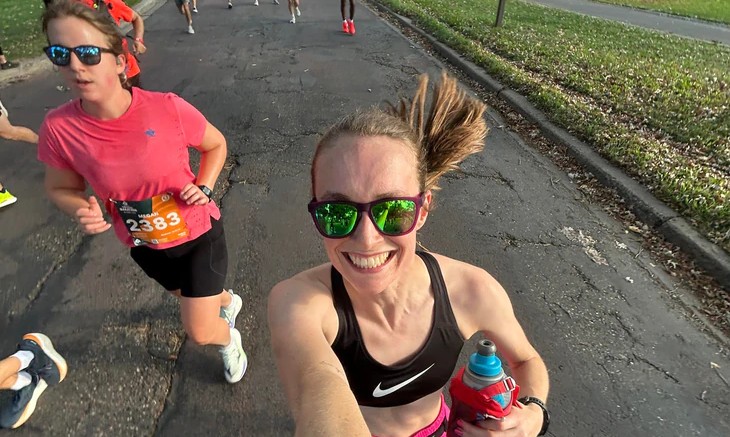
In October of that same year, she managed to complete her first marathon. For the first time, she was able to run outdoors for hours wearing shorts and a t-shirt, without the multiple layers of protective clothing she previously needed. In June 2026, she participated in another race of this distance.
This improvement was also reflected in more everyday situations, which for her were not so ordinary. During a family vacation in July 2026, she was able to spend a week enjoying outdoor activities without suffering the reactions that previously conditioned her

