


17 September 2026
Paula, Nursing student at Mundae: “I knew that sooner or later I would make this dream come true”
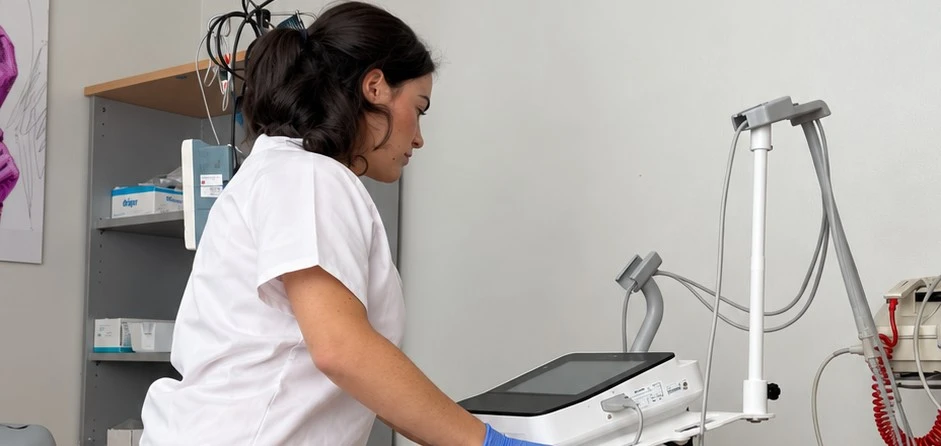
Paula María Moreta is from Salamanca and is currently in her final year of Nursing at Mundae International University. Her journey so far has combined research, healthcare training and a vocation for caring that, as she tells us, goes back many years.
Before joining Mundae, she worked in the research department at the University of Burgos and trained in Diagnostic Imaging. Today, she combines her studies, clinical placements and work, with the goal of becoming the nurse she has always wanted to be.
In this interview, we talk to her about that journey, what it means to return to education while working, and how her previous experiences have shaped the way she understands Nursing.
From research to a profession that was always there
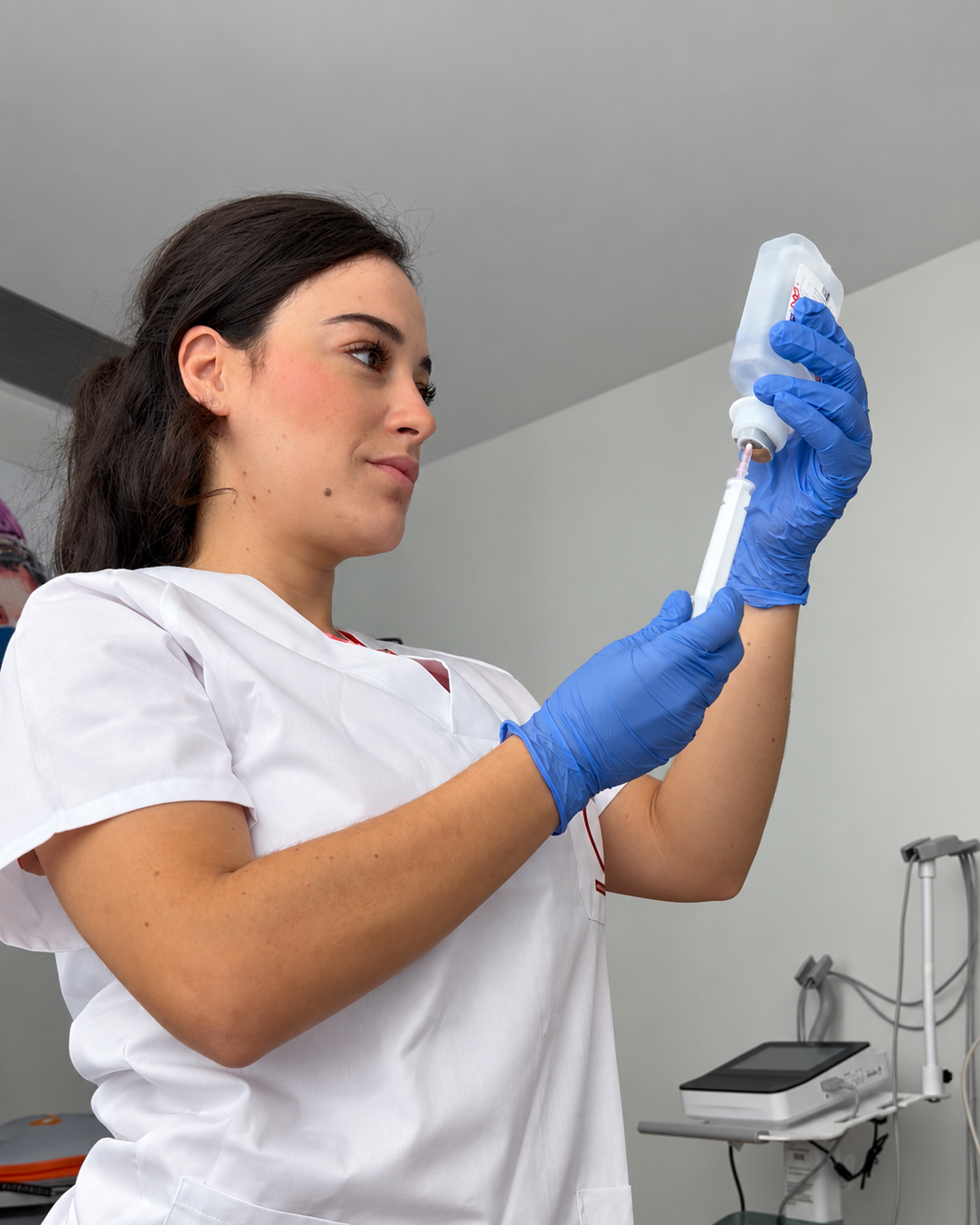
Paula’s path towards Nursing did not begin directly at university. Before that, she worked in a very different environment: the Department of Human Evolution at the University of Burgos, where she worked with analytical techniques, computed tomography and palaeoanthropological, archaeological and geological materials.
Paula, to give us some context, tell us a little about yourself, where you are from and where you are currently in your studies.
My name is Paula María Moreta, I am from Salamanca and I am currently in my final year of Nursing.
We mentioned that before studying Nursing, you worked in research at the University of Burgos. What exactly did your work involve, and what did you take away from that experience?
Yes, before starting Nursing, I worked in the Department of Human Evolution at the University of Burgos, where my work mainly involved preparing palaeoanthropological and geological samples for subsequent analysis using different techniques.
I also carried out measurements, reconstructions and computed tomography studies on palaeoanthropological, archaeological and geological materials, as well as interpreting data obtained through different analytical methods. All of this was done following the relevant radiological, chemical and mechanical protection procedures.
It was undoubtedly one of the best periods of my life because I grew enormously, both professionally and personally. It was precisely then that I decided not to give up on the dream I had always had: studying Nursing. Although at first glance they may seem like very different fields, to me they have a lot in common: both aim to contribute knowledge and help people.
You have mentioned that you would not like to move away from research completely. Can you see yourself combining Nursing, clinical care and research in the future?
Yes, I can, and above all, I would really like to make it happen. As I mentioned before, for me, research and Nursing share a common purpose when they are driven by vocation.
I believe research has enormous potential within Nursing, and I would love to take part in projects that help improve patient care and people’s quality of life.
But your previous experience does not end there. You later studied Diagnostic Imaging. What did you take away from that first healthcare qualification?
I studied Diagnostic Imaging because it was an opportunity to continue my education without moving away from the healthcare field. It was one of the best decisions I have made because it allowed me to keep alive the dream I had always had of becoming a nurse.
Sometimes, when you are working, it can be difficult to continue studying and maintain that motivation, but that training gave me the final push I needed to begin this wonderful journey. Today, I can say that I do not regret it at all.
You come from a very technical field such as diagnostic imaging. What have you found in Nursing that you were missing or that particularly appealed to you?
What attracts me most about Nursing is the direct contact with people. I am particularly interested in Community Nursing because I believe that support, communication and health education are fundamental.
Mastering the technical aspects is essential, but treating patients with empathy, respect and warmth is just as important. We are often there to support them during very difficult moments, and that requires both professional preparation and humanity.
Do you think your experience in Diagnostic Imaging and research gives you a different perspective on Nursing?
Yes, I think so. My experience in research and Diagnostic Imaging has taught me to look at situations from different perspectives and to explore the reasons behind things in greater depth. I have also always been very eager to learn, and I think that whole journey gives me a different perspective on Nursing.
Having already had a healthcare background, did you start Nursing feeling more confident, or did you still have to change your mindset?
I think I definitely had to change my mindset. Previous healthcare training helps, but you also have to learn what it means to be a nurse. The responsibilities are different, and so is the way you see the patient and approach each situation.
Previous experience gives you a good foundation, but being a nurse means developing a different way of thinking and caring.
What difference have you noticed between training in a more technical field and now receiving an education so focused on real clinical practice?
What I have noticed most is the level of responsibility. We work directly with people’s health, and that means every decision carries significant weight. It is a huge responsibility, but also one of the most rewarding parts of the profession.
A vocation that had been there for years
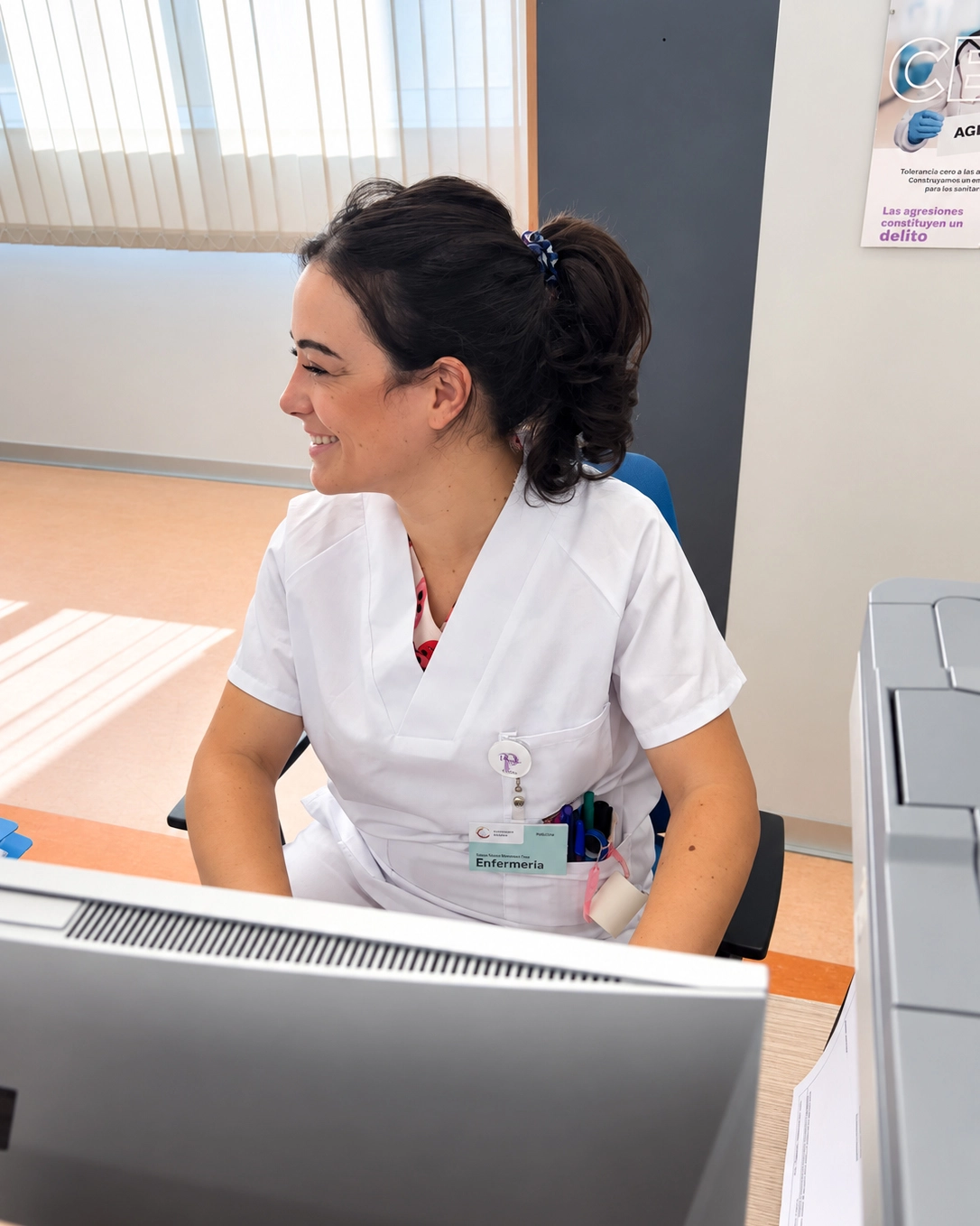
Despite having worked in different fields, Paula explains that Nursing was never a sudden decision. It had been on her mind for a long time.
When did you realise that Nursing was truly the path you wanted to follow?
It all goes back to my childhood. Ever since I was little, I have always been drawn to caring for and helping others. I have never been squeamish; on the contrary, hospitals and health centres have never made me uncomfortable.
As I grew older, I became increasingly certain that I wanted to dedicate myself to Nursing, and it was something I talked about constantly with my family and friends. I knew that sooner or later I would end up fulfilling that dream.
Why did you choose Mundae?
I chose Mundae because it was the university that best suited my personal circumstances. I was working full-time and needed a flexible model that would allow me to combine both. The virtual campus gave me that possibility, which I had not found at other universities.
You are currently working in another sector while studying and completing clinical placements. What does maintaining that pace involve on a day-to-day basis?
It is possible to combine everything, but it requires a great deal of discipline and commitment. We are studying for a profession that carries a huge responsibility, so we need to prepare ourselves properly for the moment when we begin practising. Ultimately, our work will have a direct impact on the health of many people.
When work, study and clinical placements overlap, what helps you stay organised and make everything more manageable?
Organisation has been essential. I have worked throughout my entire degree, and it has not always been easy. There have been times when I was extremely tired, but there have also been moments when seeing the results gave me the strength to keep going.
I would usually work in the morning, do my clinical placement in the afternoon and study at night, or the other way around. When you have a goal that means so much to you, you learn to organise your time very well.
What is this stage teaching you about discipline, perseverance and managing your time and energy?
It has taught me that, with effort, perseverance and organisation, you can achieve great things. There will always be difficult moments, but there will also be times when all that effort feels worthwhile.
During your clinical placements, has there been a moment when you thought: “I made the right decision”?
Yes, many times. I have been fortunate enough to work alongside excellent professionals who have taught me a great deal and made me feel part of the team from the very beginning. Every one of those experiences has confirmed that I chose the right path.
What kind of nurse would you like to become?
I would like to be a caring, empathetic and committed nurse, with a lot of heart, while never stopping learning and improving as a professional.
Which area of Nursing would you like to research or continue learning more about in the future?
The field that interests me most is Community Nursing, particularly because of its preventive approach and its close relationship with patients. Even so, I am open to other areas because I believe they all offer opportunities to continue growing and learning.
What has it meant to you to be able to study in a flexible way that allowed you to work and continue progressing in your education at the same time?
It has meant being able to fulfil one of my biggest dreams without having to give up my professional responsibilities. That flexibility has been key to helping me progress both professionally and personally.
Which Mundae resources, lecturers or forms of support have helped you most during the busiest periods?
The resources available on the platform have helped me a lot because they are very accessible and make learning easier. As for the teaching staff, each lecturer has a different way of teaching, but overall, I have always found support whenever I have needed it.
A reality shared by many students
Paula’s story has allowed us to take a closer look at a reality shared by many Mundae students: those who want to continue moving towards a vocation built over time, through commitment and perseverance, while organising their lives around other responsibilities.
It is a reality that reminds us of the importance of supporting students like Paula as they continue taking steps along a path they have always felt was meant for them.

